
PRO PAINTING BLOG
Recent Updates
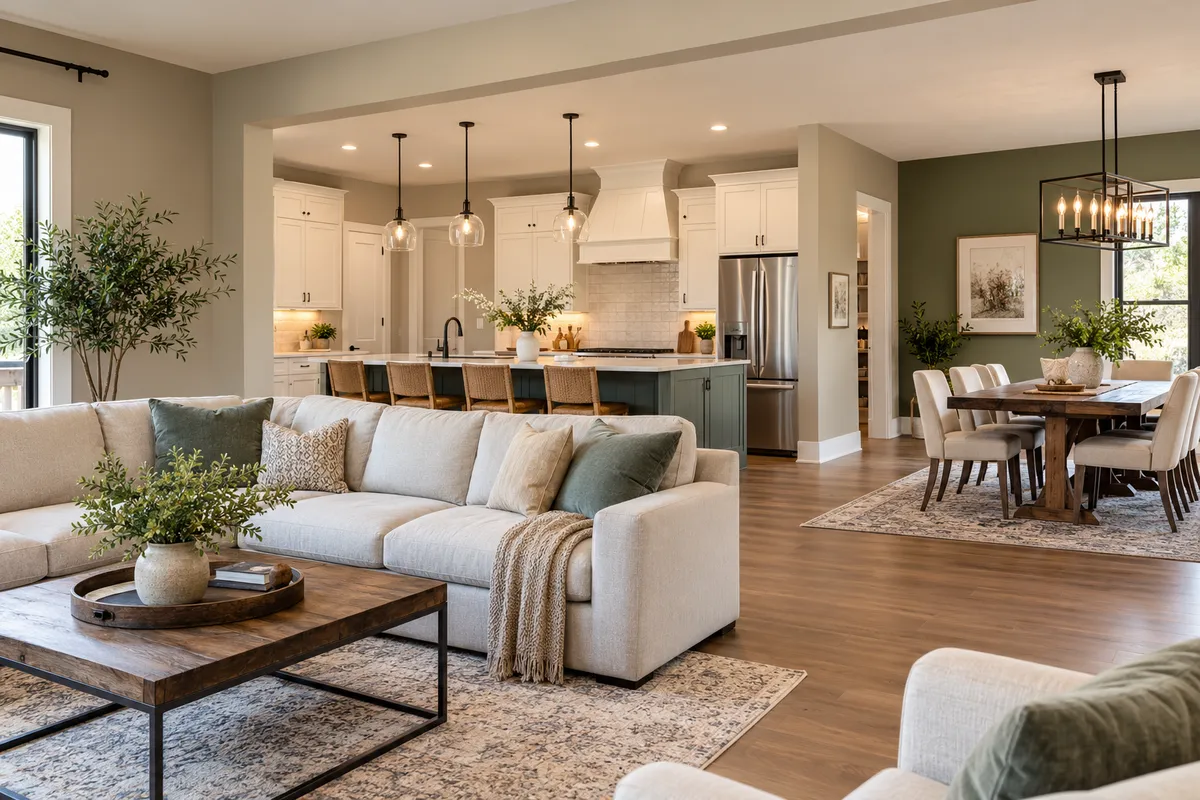
How to Choose Paint Colors for an Open-Concept Home in Sioux City
Choosing paint colors for an open-concept home can feel challenging. Your kitchen, dining room, and living room may share one continuous space, which means every color needs to work together. A shade that looks beautiful in one corner might appear too dark, too cool, or completely different when viewed from another part of the house.
The good news is that you don't need to use the same color on every wall to create a cohesive home. With a thoughtful palette, the right balance of warm and cool tones, and careful attention to lighting, you can create a space that feels connected, welcoming, and full of character.
For homeowners looking for open concept paint colors in Sioux City, the best starting point is to consider your existing flooring, kitchen cabinets, furniture, and natural light before selecting paint.
At Sioux City Pro Painting, we help homeowners refresh their interiors with professional painting services, careful preparation, and color guidance tailored to their spaces.
Why Paint Color Matters in an Open-Concept Home
Open-concept layouts connect multiple living areas without traditional walls or doorways separating them. This design creates a spacious atmosphere, encourages natural light to travel through the home, and makes everyday activities feel more connected.
However, the lack of visual separation also makes choosing paint colors more complicated.
When you can see the kitchen, dining area, and living room at the same time, unrelated colors can make the space feel disjointed. On the other hand, using one carefully selected color palette helps the entire home feel balanced.
The right paint colors can help you:
Create a consistent appearance across connected rooms.
Make smaller spaces feel more open and spacious.
Define different areas without adding physical walls.
Complement your existing floors, furniture, and cabinetry.
Bring warmth and personality into large, open spaces.
For Sioux City homeowners, it is also worth considering how your interior colors will look during Iowa's changing seasons. A palette that feels bright during a sunny summer afternoon may look different on a cloudy winter day.
Planning your colors around both natural and artificial lighting can help you achieve a result you'll enjoy throughout the year.
1. Start With One Main Wall Color
One of the easiest ways to choose paint colors for an open floor plan is to begin with a primary wall color.
This shade will cover most of the connected living areas and provide a consistent background for your furniture, decorations, and other design elements.
Warm whites, soft beige, light greige, and balanced neutral shades are popular starting points because they can complement a wide range of interior styles.
Consider these options:
Warm white: Creates a bright, inviting atmosphere without the stark appearance that some cooler whites can produce.
Light greige: Combines gray and beige, offering a versatile neutral that can work with many wood tones and furnishings.
Soft beige: Adds warmth and works especially well with natural wood, cream upholstery, and earthy decorations.
Pale gray: Offers a clean, understated appearance when its undertones complement the rest of the room.
The best choice depends on your home's existing finishes and lighting. For example, a warm neutral may complement honey-colored wood floors, while a balanced gray may work better with cooler stone or tile.
You can also use the same main color throughout the kitchen, dining area, and living room while introducing variety through cabinetry, artwork, furniture, or an accent wall.
2. Choose Coordinating Colors for Each Living Area
You do not have to paint every connected space the same color. The key is to select shades that belong to a coordinated palette.
A simple approach is to choose one primary neutral and one or two complementary colors for smaller areas.
Kitchen
The kitchen often contains several permanent design elements, including countertops, cabinets, backsplashes, and flooring.
Start by identifying the undertones in these materials. If your cabinets feature warm wood or cream finishes, warm white or beige walls may create a natural connection.
For white cabinetry and cooler countertops, a balanced gray or soft neutral may be a better fit.
If you want to introduce more color, consider using a muted green or deeper neutral on the kitchen island, provided it complements the surrounding finishes.
Dining Area
The dining area is an opportunity to introduce a little more personality without disrupting the overall design.
A muted sage green, dusty blue, or deeper beige can create a subtle distinction between the dining space and the kitchen or living room.
If the dining area sits directly between two other spaces, choose a color that relates to both adjoining areas. Repeating a similar undertone or accent color can make the transition feel intentional.
Living Room
Your living room should feel comfortable and reflect how you use the space.
Warm whites, light greige, and soft beige provide flexible backgrounds for furniture and decorations. If you prefer a more dramatic look, a deeper green, blue-gray, or charcoal accent wall can add depth.
Consider your sofa, curtains, rugs, and artwork before choosing a wall color. These larger elements can help determine whether your palette should lean warm, cool, or somewhere in between.
3. Consider These Open Floor Plan Paint Color Combinations
If you're unsure where to start, the following combinations offer practical inspiration for a coordinated home.
Color combination | Best suited for | Overall effect |
Warm white + soft beige | Traditional and transitional homes | Bright, warm, and welcoming |
Light greige + creamy white | Modern and contemporary interiors | Clean and understated |
Warm white + muted sage | Nature-inspired spaces | Calm and fresh |
Soft beige + dusty blue | Homes with natural wood and neutral furnishings | Balanced and relaxed |
Pale gray + deep navy accents | Modern homes with cooler finishes | Crisp and sophisticated |
Cream + muted olive green | Homes with wood, stone, and earthy textures | Comfortable and natural |
These are starting points rather than fixed rules. The same combination can look different depending on the exact paint shade, room orientation, furniture, and lighting.
For the best results, select actual paint samples and test them in your home before making a final decision.
4. Pay Attention to Natural Light
Lighting is one of the most important factors when choosing open-concept paint colors.
Because connected rooms are visible together, you may notice that the same paint color looks different in different parts of the space. A wall beside a sunny window may appear brighter, while a kitchen corner with limited natural light may look darker.
In Sioux City, where seasonal daylight varies considerably, it is particularly useful to evaluate paint samples under several lighting conditions.
Keep these considerations in mind:
North-facing areas: Often receive cooler, less direct daylight. Warm whites and balanced neutrals can help prevent the space from feeling too cold.
South-facing areas: Generally receive stronger natural light, which can make many colors appear brighter. Soft neutrals and slightly deeper shades may work well.
East-facing areas: Receive stronger morning light, which changes as the day progresses.
West-facing areas: Often receive warmer afternoon and evening light, which can intensify warm paint undertones.
Artificial lighting also affects the finished appearance. Warm bulbs can make whites and beiges look creamier, while cooler bulbs can emphasize gray or blue undertones.
Before committing to a color, view your samples in the morning, afternoon, and evening. This simple step can help you avoid choosing a shade that looks different from what you expected.
5. Coordinate Paint With Your Flooring and Cabinets
Your walls are only one part of the overall color scheme. Flooring, countertops, cabinetry, and furniture can influence how a paint color looks in the finished space.
Instead of selecting a wall color in isolation, look at these permanent or larger elements first.
For warm wood floors: Consider warm white, soft beige, or a compatible greige. These shades can complement the natural warmth of the wood.
For gray flooring: Look for balanced neutrals that work with the floor's undertones. Some gray floors lean blue, while others have warmer beige undertones.
For white kitchen cabinets: Creamy whites, light greige, muted green, and selected gray shades can create contrast without overwhelming the space.
For dark cabinets: Lighter wall colors can help balance the room and prevent the kitchen from feeling too heavy.
For colorful furniture: A restrained wall palette can help a bold sofa, rug, or artwork stand out.
Remember that matching every surface exactly is not necessary. The goal is to create a relationship between the colors so that the entire space feels thoughtfully designed.
6. Use Accent Colors to Define Different Zones
One advantage of an open floor plan is that you can create distinct areas without building walls.
Paint can help establish those boundaries when used strategically.
For example, a muted green behind the dining table can make the dining area feel separate from the living room. A deeper shade behind a fireplace can establish a focal point, while the remaining walls maintain the primary neutral color.
The key is to choose accent colors that support the larger palette.
Here are three ways to introduce accent colors:
Feature walls: Highlight a fireplace, dining area, or another natural focal point.
Kitchen islands and cabinetry: Introduce a contrasting color while keeping the surrounding walls consistent.
Architectural details: Use selected trim, built-ins, or recessed areas to create visual interest.
When changing wall colors, look for natural stopping points such as inside corners, doorways, or architectural transitions. Avoid switching colors in the middle of a continuous wall unless the design deliberately calls for that effect.
Using too many unrelated colors can make an open space feel busy. A small, coordinated palette usually creates a more balanced result.
7. Choose the Right Paint Finish for Each Surface
Paint color gets most of the attention, but finish also affects the appearance and maintenance of your walls.
For open-concept homes, the finish should suit the surface, amount of traffic, and desired appearance.
Flat or matte: Helps minimize the appearance of minor wall imperfections and offers a low-sheen look. However, some formulations may be harder to clean.
Eggshell: Provides a subtle sheen and is a common choice for living rooms, dining rooms, and other general living spaces.
Satin: Offers greater washability and can be useful in kitchens, hallways, and areas that experience more frequent cleaning.
Semi-gloss: Often works well on trim, doors, and other surfaces where a harder, more washable finish is desirable.
The best finish depends on the specific paint product and the condition of your walls. You should also consider how much light reflects off the surface, particularly in large rooms with multiple windows.
If you are planning a full interior refresh, Sioux City Pro Painting's interior painting services can help you plan a consistent, professional finish throughout your home.
8. Test Your Paint Colors Before Painting the Entire Space
A color that looks perfect on a small paint chip may appear completely different across a large wall.
Testing samples before painting is one of the most useful ways to avoid costly changes later.
Follow these steps:
Select two or three potential wall colors.
Apply samples to large sample boards or suitable test areas.
Move the samples between the kitchen, dining room, and living room.
Observe the colors under natural and artificial light.
Compare them with your flooring, cabinets, and furniture.
Narrow your choices to the combination that looks most cohesive throughout the space.
If you are choosing several colors, view them together from different points in the home. A combination that works beautifully in separate rooms may feel disconnected when all the colors are visible at once.
For homeowners who want help with the selection process, Sioux City Pro Painting offers painting expertise and color guidance to help bring the different parts of an interior together.
9. When Should You Hire a Professional Painter?
Choosing colors is only one part of a successful painting project. Large, open spaces can also require careful surface preparation, consistent application, clean transitions, and attention to detail.
Professional painters can help when:
You are repainting several connected rooms at once.
You want different colors to transition cleanly between areas.
Your walls have cracks, holes, or other imperfections that need preparation.
You are changing from a dark color to a lighter one.
You want a consistent finish across large walls and high-visibility areas.
You would prefer to avoid the time and disruption of painting the entire space yourself.
Sioux City Pro Painting provides residential painting services throughout Sioux City and the surrounding Siouxland area, with an emphasis on preparation, workmanship, and clear communication.
Explore the company's interior painting services in Sioux City to learn more about refreshing your living spaces.
Frequently Asked Questions
What are the best open concept paint colors for homes in Sioux City?
Warm whites, light greige, soft beige, balanced gray, and muted sage are useful starting points. The best shade depends on your home's natural light, flooring, cabinets, and furnishings. Testing samples in connected rooms helps you choose colors that work together.
Should an open-concept home be painted one color?
No. Using one primary wall color throughout the connected spaces is a simple way to create continuity, but you can add complementary shades through accent walls, kitchen islands, or selected architectural features.
How many paint colors should I use in an open floor plan?
A practical starting point is one main wall color, one supporting color, and one consistent trim color. You can introduce additional shades through furniture and decorations. Larger or more detailed spaces may benefit from a broader palette when the colors are carefully coordinated.
What colors make an open-concept room look bigger?
Light neutrals, warm whites, soft beige, and pale gray can help a space feel brighter and more open. Using similar wall colors across connected areas also creates a visual flow that makes the boundaries between spaces less noticeable.
Can I use different colors in my kitchen and living room?
Yes. Choose colors with compatible undertones and consider how the two spaces look together from a distance. You can also keep the walls the same color and use contrasting cabinetry or a feature wall to distinguish each area.
How do I choose paint colors for an open floor plan with different flooring?
Identify the undertones in each flooring material and select a wall color that complements both. If the flooring changes between the kitchen and living room, a balanced neutral may help connect the areas without requiring the floors to match.
Are accent walls a good idea for open-concept homes?
Yes. Accent walls can add personality and help define specific areas, especially around fireplaces or dining spaces. Choose a shade that relates to your main palette and use a natural architectural stopping point where possible.
How does lighting affect open-concept paint colors?
Natural and artificial lighting can change how a color appears throughout the day. A paint shade may look warmer in afternoon sunlight and cooler in a shaded area. Test samples in different parts of the home and observe them at different times before deciding.
What paint finish is best for an open-concept living room and kitchen?
Eggshell is a common choice for living rooms and dining areas, while satin may be useful in kitchens and other areas that need more frequent cleaning. The appropriate finish depends on the paint formulation, surface condition, and maintenance requirements.
Can Sioux City Pro Painting help with interior color selection?
Sioux City Pro Painting provides interior painting services and color guidance to help homeowners plan their projects. Contact the team to discuss your space, preferred colors, preparation needs, and painting estimate.
Create a Cohesive Look With the Right Paint Colors
Choosing paint colors for an open-concept home does not mean every wall needs to look identical. The goal is to create a coordinated palette that allows your kitchen, dining area, and living room to feel connected while giving each space its own character.
Start with one main wall color, coordinate supporting shades with your existing finishes, and test your selections under different lighting conditions. A little planning can help you avoid clashing colors and create an interior that feels comfortable, balanced, and distinctly yours.
Ready to refresh your open-concept home?
Contact Sioux City Pro Painting to request a free painting estimate and discuss your interior painting project.
Call (712) 217-3200 to get started.
Serving Sioux City, Iowa, and surrounding Siouxland communities.

WELCOME
Welcome to our site! We are in the process of building our blog page and will have many interesting articles to share in the coming months. Please stay tuned to this page for information to come. And if you have any questions about our business or want to reach out to us, we would love for you to stop by our contact page.
Thank you!
©2026 Sioux City Pro Painting - All rights reserved
Created by Showcase 712